The Simpsons Called It “a Peter Hammill Song.” The Man Who Wrote It Is Used to That.
A Simpsons writer reached for a Peter Hammill song to explore a crisis of faith. She didn’t know the man who actually wrote it has been handing away credit for sixty years.

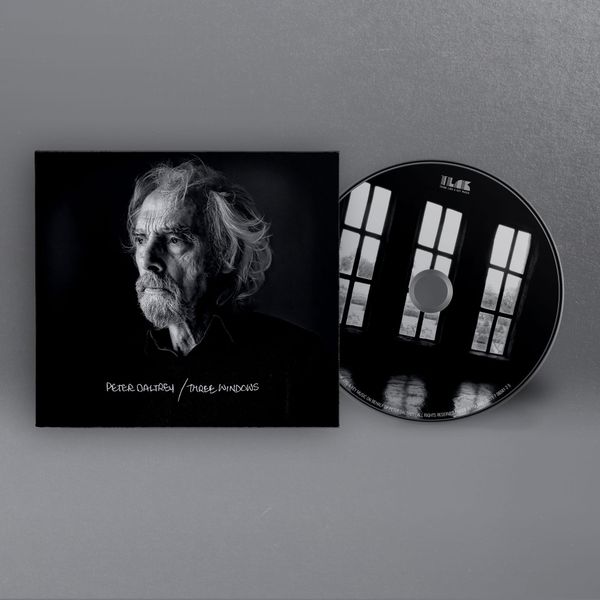
On December 17, 2024, exactly thirty-five years after Springfield’s first Christmas, The Simpsons released a double-length holiday special on Disney+ called O C’mon All Ye Faithful. Its emotional core is a genuine crisis of faith: Ned Flanders, of all people, stops believing. In an interview about the episode, writer Carolyn Omine explained where that idea came from. She had been in a dark place, she said, and kept returning to a song by, in her words, a punk rocker named Peter Hammill, a song called Four Pails. Its argument is bleak and beautiful: that a human being is just four pails of water and a bag of salts, chemicals and nothing more, a philosophy that feels fine in the abstract and unbearable the moment someone you love dies. That tension became Ned’s whole storyline.
It is a lovely piece of provenance. There is just one wrinkle, and it is the most telling detail in the whole story. Hammill sang Four Pails, on his 1986 album Skin. He did not write it.
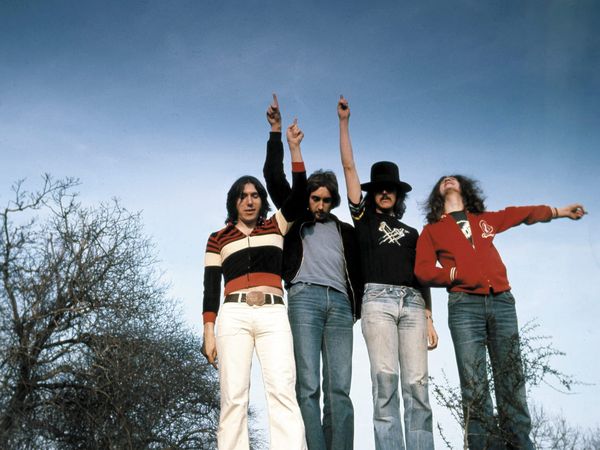
The author is Judge Smith, and being quietly left off the credit is the recurring theme of one of British music’s strangest careers. In 1967, Smith returned from San Francisco with a list of possible band names in his pocket, met a young singer named Peter Hammill, and the two founded a group using one of the names on that list: Van der Graaf Generator. Smith named the band. Then, in 1968, before it became one of progressive rock’s most fearsome institutions, he amicably stepped aside. He had a habit of building something remarkable and then handing the spotlight to someone else.
Hammill never forgot him. Across the decades he has recorded a whole shelf of Judge Smith songs, Imperial Zeppelin and Viking on his 1971 debut Fool’s Mate, The Institute of Mental Health, Burning, Time for a Change, and Four Pails among them, performing them live for years. So when a Simpsons writer reaches, in genuine grief, for a song that helped her think about what a person is, and reaches through Hammill’s voice to a lyric Judge Smith wrote, the line runs further back than almost anyone watching could know. Four Pails first surfaced in The Ascent of Wilberforce III, a mountaineering musical Smith wrote with composer Maxwell Hutchinson, staged in Edinburgh in 1981.
Which brings us to why we are telling you all this. Wilberforce had a sibling, an earlier and even more ambitious Smith-and-Hutchinson rock musical that has been almost impossible to hear for half a century, and Think Like A Key Music has just brought it back. The Kibbo Kift: The 1976 Rock Musical tells the true and genuinely bizarre story of the Kindred of the Kibbo Kift, a post-war breakaway from the Boy Scouts that mutated over two decades from utopian woodland campers into uniformed street-fighters for a fringe economic theory. It is The Wicker Man by way of a 1970s repertory theatre, and its original Sheffield production was directed, improbably, by a young Mel Smith before Not the Nine O’Clock News made him famous. (Hutchinson, for his part, went on to design Pink Floyd’s Britannia Row studio, which tells you something about the company Judge Smith keeps.)
So the next time you watch Ned Flanders stare into the abyss, remember that the thought underneath it travelled from a forgotten English musical, through Judge Smith’s pen, into Peter Hammill’s voice, and finally into Springfield, picking up the wrong byline along the way. Judge Smith is used to that. The least we can do is restore the part of his work that history mislaid. You can read the full story of the lost musical here.
The Kibbo Kift: The 1976 Rock Musical is available from Think Like A Key Music.