He Left the Wall of Amps Behind. W.D. Miller Found Something Just as Heavy in a Quiet Room.
The Florida-born, Kentucky-based songwriter turns metal history, family, depression and grief into the unhurried Americana of Child of the Kindly South.

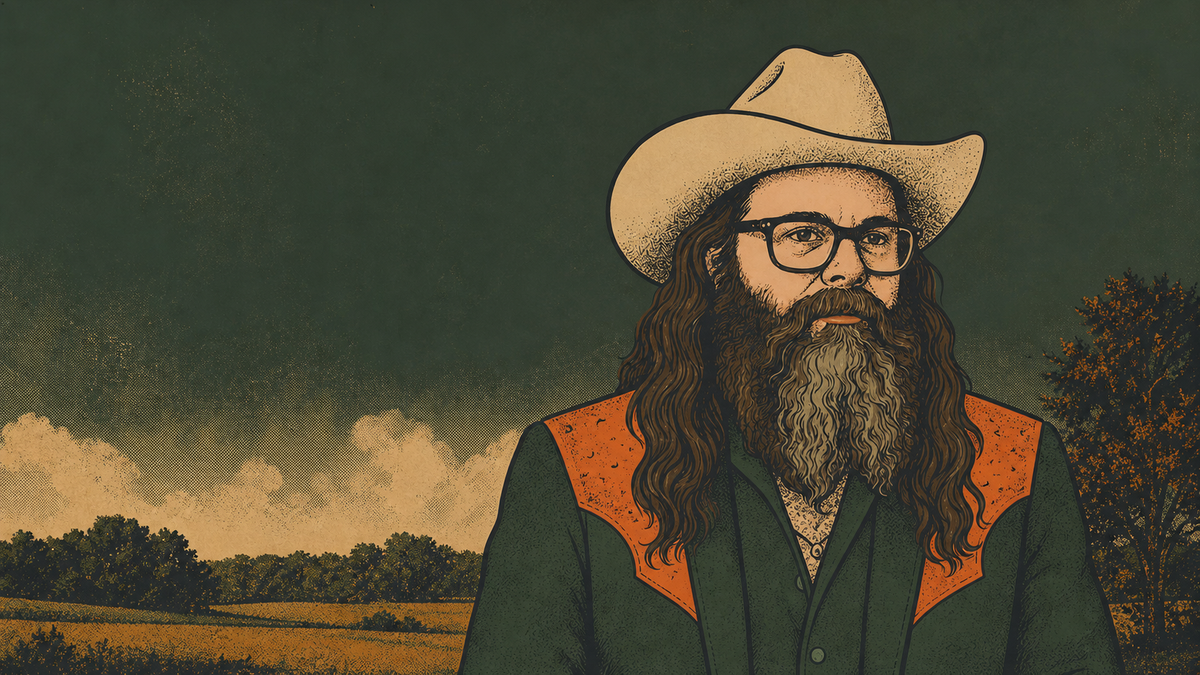
W.D. Miller did not exactly take the conventional route to country music.
His earliest recording sessions happened around 1994 or 1995, when he was about twelve years old and he and his friend Roger Houdaille filled cassette after cassette on a Tascam four-track. Miller estimates that they recorded more than a hundred “songs.” His first proper studio experience came with a hardcore band in high school. The quieter music arrived later—but it did not replace the heavy stuff so much as teach him another way to deliver the same emotional force.
“Somewhere along the way, I realized a quiet room with a guitar and a story could move you just as hard as a wall of amps, albeit differently.”
That sentence is as good a way as any to enter Child of the Kindly South, Miller’s second solo album for Think Like A Key Music. Released March 20, 2026, it is an eleven-song journey through family, faith, grief, depression, regret and the difficult business of becoming a better man. Its sound lives between folk, country and Americana, but the emotional weight belongs to somebody who still understands what volume is supposed to do.
From a Florida four-track to a Kentucky studio
Miller was born in Florida and now lives in Kentucky, where his mother’s side of the family has roots. He moved there in 2018 after his wife was offered a relocation through work. The change of landscape suited a writer whose songs were already moving toward country and folk.
His first TLAK solo album, Burnt Bridges & Broken Hearts, had been made at home with no budget. Roger—the same childhood friend from the four-track years—simply heard a handful of songs and said, “Let’s do it.” Miller remains proud of what they made, but Child of the Kindly South represents a considerable step forward.
The new album was produced, engineered and mixed by J. Tom Hnatow at Small Blue Studio in Lexington, Kentucky, then mastered by Justin Perkins at Mystery Room Mastering. The performances are warm and spacious, with contributions from players associated with Magnolia Boulevard, Horse Feathers and Frigidkitty. Maggie Noëlle, Michelle Miller, Aaron Boyd and Aaron Smith add guest vocals, while fiddle, pedal steel, vibraphone, organ and glockenspiel deepen the arrangements without crowding the songs.
The concept album that revealed itself
Miller did not set out to make a concept album. Halfway through the process, however, he realized that placing the songs in a particular order created a story.
“That’s probably because these songs are my story,” he explains. “Even when they’re not strictly biographical, they still reflect my life in an allegorical way.”
The record begins with the brief instrumental “Etude No. 1 in A,” then drops into “Banquet of Stone,” a gallows narrative written with George Geanuracos. From there, the album moves between external stories and unmistakably personal reckoning.
“Carry Your Burden” is sung with Miller’s wife, Michelle, for whom he wrote the song. Its promise is domestic and practical: not grand romance, but the work of carrying weight together when winter is cold, a baby needs care and somebody is trying to hold the household upright.
“Dear John,” meanwhile, is a letter to John Prine. Miller was scrolling through social media in his kitchen when he learned that Prine had died. He sat down and wrote the song in one pass, through tears.
“Grief is quite a powerful motivator,” he says.
The album’s darker stretch is equally direct. “Shades Are Drawn” describes the isolating paralysis of severe depression—the phone left ringing, the television reruns, the smallest task suddenly resembling a mountain. Miller calls it the kind of self-imposed isolation that can nevertheless feel impossible to escape.
“Best Revenge,” written by Geanuracos for Yankee Roses, offers a different sort of reckoning. Miller hears its narrator as an older man speaking to his younger self: anger remains in the rear-view mirror, but living well has become more satisfying than surrendering any more mental territory to the person who caused the damage.
By the closing “Little Things / CODA,” the record has reached something like grace: a small house, a well-used car, dogwoods in bloom, a child dancing and a family held together by ordinary love.
The Band changed the direction
Miller’s reference points stretch across Willie Nelson, Hank Williams, Johnny Cash, Merle Haggard, the Carter Family, Dave Van Ronk and John Prine. But the artist who made the hybrid click was The Band.
He discovered them as a teenager and fell hard for the way rock, country, folk and older American traditions could inhabit the same room. The connection ran deep enough that he later named his son after Levon Helm.
That broad listening remains audible. Miller can cite Red Headed Stranger, Music from Big Pink, Black Sabbath’s debut, John Prine’s first album and Brian Eno’s Ambient 1: Music for Airports without treating any of them as incompatible. The point is not genre loyalty. It is finding the sound a story requires.
An album meant to be lived with
Child of the Kindly South does not chase the listener. It trusts patience, perspective and lived-in musicianship. The songs are unhurried because the lives inside them are complicated enough already.
Think Like A Key Music’s CD edition comes in a six-panel digipak. The limited “Green River” vinyl edition is pressed on translucent green vinyl and includes an 11-by-11-inch lyric insert. The album is also available digitally.
W.D. Miller may have turned down the wall of amps, but he has not gone soft. He has simply learned that a close voice, an acoustic guitar and the right line at the right moment can hit every bit as hard.
Explore Child of the Kindly South on the Think Like A Key Music catalog.
Interview source: W.D. Miller in conversation with Italian music journalist Raffaele Galli. Additional production information and lyrics from the TLAK release archive.