'My Musical Life Was an Odyssey': Mark Wirtz in His Own Words
With Think Like A Key Music preparing to reissue Wirtz's Capitol albums Balloon and Hothouse Smiles this July, we publish this 2001 interview for the first time.
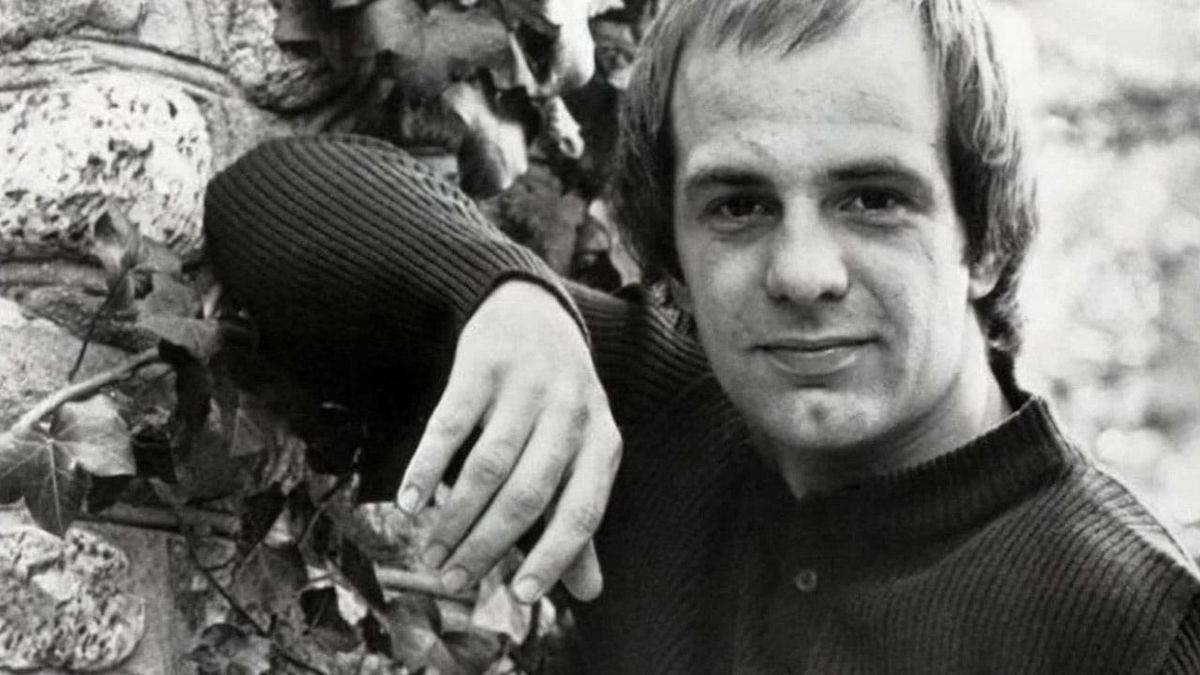
With Think Like A Key Music preparing to reissue Wirtz's long-out-of-print Capitol albums Balloon and Hothouse Smiles this Friday, we're publishing this 2001 interview in full for the first time, in which the visionary producer reflects on the Teenage Opera, his Hollywood years, and the records he left behind.
Mark Wirtz was one of those producers whose influence far outstripped his fame. Born in Strasbourg in 1943, he arrived at EMI's Abbey Road Studios in the mid-1960s and promptly set about trying to make movies on record. The result was A Teenage Opera, a concept album that, though never completed in his lifetime, anticipated the narrative ambitions of the Pretty Things' S.F. Sorrow and the Who's Tommy by years. Its lead single, "Excerpt from A Teenage Opera" (performed by Keith West), reached number 2 on the UK chart in 1967.
But there was far more to Wirtz than Grocer Jack. He signed Pink Floyd to EMI, discovered and produced Tomorrow (featuring Keith West and Steve Howe), and in the early 1970s relocated to Los Angeles, where he signed a writer/artist/producer deal with Capitol Records. The two albums that followed, Balloon (recorded at Apple Studios with engineer Geoff Emerick) and Hothouse Smiles, remain among the most fascinating and least-heard records of the era: lush, theatrical, wryly intelligent pop that sounds like nothing else in the Capitol catalogue.
Wirtz passed away on August 7, 2020, after a long battle with Pick's disease. He was 76.
This interview was conducted by Robert Pally in 2001, a period when Wirtz was living in Savannah, Georgia, working on his writing career, and looking back on a musical life he rightly called an odyssey. It has never been published in English until now.
Pally: What was important for you as a producer?
My vision and primary ambition was to make "movies on record." I only partly succeeded with the never-completed Teenage Opera and the later Philwit & Pegasus LP, to my mind by far my best British work. Only 30 years later, when I composed and recorded the complete Teenage Opera "sequel" TEMPO, did I finally manage to make my dream come true.
Pally: How did you come up with the idea for the rock opera The Teenage Opera?
It was a dream I had. In it, I saw this grocer who was taken for granted by the village, and only appreciated when he died, mostly by the children of the town who had taunted him when he was alive, but who loved and now missed "Jack" dearly.
Pally: Looking back, what do you think of The Teenage Opera today?
A wonderful example of how spirit, courage, and determination can make the impossible possible. I am proud of Teenage Opera, alas, sad that a) I have become known for that more than many other works of mine that I believe to be superior, and b) sad that I was never allowed at the time to complete the Teenage Opera as envisioned, consequentially cursing me with the shadow of having left behind an unfinished work and unkept promise. I am still hoping that TEMPO will finally put things right.
Pally: Was there ever an attempt to perform it in its entirety?
Teenage Opera was NEVER intended to be a theatrical work! The opposite was true! It was intended to ultimately be an animated movie premise, thus allowing the original, contemporary soundtrack to be performed in complete fidelity. A stage "pit orchestra" could never have reproduced the music score, nor emulated the sounds I created. Perhaps the closest thing to what I had in mind was the Beatles' later Yellow Submarine.
Pally: There is a rap version of "Grocer Jack." How did that come together?
Frank, the German producer, had been a fan of "Grocer Jack" for 30 years, and it had been his life ambition to one day record a contemporary version of it. I guess the time had come about two years ago, when Frank called me and asked me to produce the children's section for the record here in Savannah with some young Black kids. Apparently, he and several other producers had tried, but nobody could pull it off. So I agreed and auditioned kids for the session, which went great! Typical of Teenage Opera troubles and delays, it took Frank two years to find the right rappers and arrive at the right mix. I have not heard the final mix yet.
Pally: How and when did you discover the band Tomorrow? What did you like about their music?
They were introduced to me by Pink Floyd, whom I had signed to EMI (though did not produce) because I, rightly, thought that my friend Norman Smith was a better producer for them. I DID however feel right for Tomorrow and signed them on the spot.
Pally: How many solo records did you put out? What do you think about them today?
There have been solo records and compilation albums out there on the market that I don't even know about, so I have lost count. These, however, are the key ones (for better or worse) that I produced as bona fide releases:
- Latin A Gogo — Ember (originally entitled Wirtz 'n' Music)
- Mood Mosaic — EMI
- Philwit & Pegasus — Chapter One
- A Teenage Opera — RPM
- Fantastic Teenage Fair — Teldec
- Come Back And Shake Me — Teldec
- Balloon — Capitol
- Hothouse Smiles — Capitol
- Lost Pets — never released, but tracks appeared on The Hollywood Years
- Cartoon — CBS (also never released, other than the singles, but included in The Hollywood Years)
- The Hollywood Years — 2-volume CD, RPM
- The London Years — double CD, RPM, scheduled for release in June/July 2001. This is the pivotal chronicle of my music career, from my earliest recordings and productions (some never released), to my pre-EMI "Colinio Productions" days, to the "post-EMI London years," to my solo work in the US, to my "Swan Song" TEMPO. Perhaps the most important aspect of this release is that it finally presents me as a rock'n'roller (in my fashion) rather than the "Easy Listening" guy I have so erroneously been perceived as for so long.
- TEMPO (not yet released)
Pally: Is there one of your albums that you don't like anymore?
Yes: Fantastic Teenage Fair and Come Back And Shake Me. Both crap, with only a couple of track exceptions. I never liked these albums, they were "paying the rent" money gigs.
Pally: You made a couple of Easy Listening albums. How did you approach them?
I didn't really think about it much, just went into the studio and recorded them. They were "safe" and "market-proof" assignments, so my "creativity" only applied to compositions of mine like "A Touch Of Velvet." But they were work, and important opportunities to hone my studio skills.
Pally: Do you still produce bands?
No. I was never an ideal band producer, with the exception of Tomorrow because of my musical bond with Keith West. I almost felt like the 5th member of Tomorrow. Maybe I should have been. Chuckle.
Pally: What was the last song you wrote and what was it about?
My last composition was "KC's Theme," which I composed and recorded just before I left Santa Barbara and California to move to Savannah to be with KC. It's on The Hollywood Years — Vol. One, Kitschinsync. By now, four years later, KC and I had the most extraordinary odyssey (typical of my life), but she remains the love of my life and my muse. "KC's Theme" was my "Swansong" and I don't foresee ever composing again. I am now passionately committed to a new career as a writer (under the name Mark Sinclair) and novelist, even though I continue to promote and help market my past music and record catalogues. I DO, however, have what I call my "treasure chest" in which I have many compositions that I secretly collected over the years and that I am very proud of. So, no matter what might approach me in future, be it a movie score for which I might come out of my "retirement," a musical, or even a final album — I have the material.
Pally: What music or bands inspired you in the sixties?
Motown, Nashville, Atlantic, Beach Boys, Paul Anka, Rick Nelson, Neil Sedaka, Jerry Lee Lewis, Little Richard, the Goffin-King team, as well as Leiber & Stoller, Phil Spector, Quincy Jones (then a rock producer), arrangers Jack Nietzsche, Gene Page, engineer Roy Halee. Later favorites: Supertramp, Queen, Stevie Wonder, and Elton John.
Pally: What music or bands inspire you today?
Urban music — hip hop, rap — as well as movie scores, especially those by Hans Zimmer. Also, Elton John's music continues to be of never-ending inspiration and joy to me.
Pally: When did you first think about a song: "Wow, that's great, I want to do that too"?
When I heard "Diana" by Paul Anka.
Pally: To what music or bands do you listen today?
Still listen to Supertramp and Queen and Beach Boys. And keep up with all the new bands.
Pally: How do you earn your money today?
As a writer.
Pally: Looking back, what do you regret from your past?
Sadness, yes, but no regrets. "When dreams turn into regrets, we are getting old" (John Barrymore). I am still only just beginning, and everything is still possible.
Pally: What was the highlight of your musical career?
First time I conducted an orchestra in a recording studio, the mixing session of "Sam," completing and listening to the playback of Balloon, and completing TEMPO and "KC's Theme."
Pally: What was the low point of your musical career?
Too many to count or recall. It was an odyssey. Feeling that I had to leave England because radio (the BBC monopoly) refused to play my records was probably the lowest, but also an exciting turning point when I got to Hollywood. At least I was no longer just the man who wrote Teenage Opera because nobody in the US had ever heard of "Grocer Jack." So I got a fresh start.
Interview by and courtesy of Robert Pally, 2001.