The Psychedelic Band Colleges Tried to Stop from “Brainwashing” Audiences
Elmer Gantry’s Velvet Opera turned strobe-lit “brainwashing” panic into one of British psychedelia’s sharpest debuts—now restored with essential singles, demos and rarities.

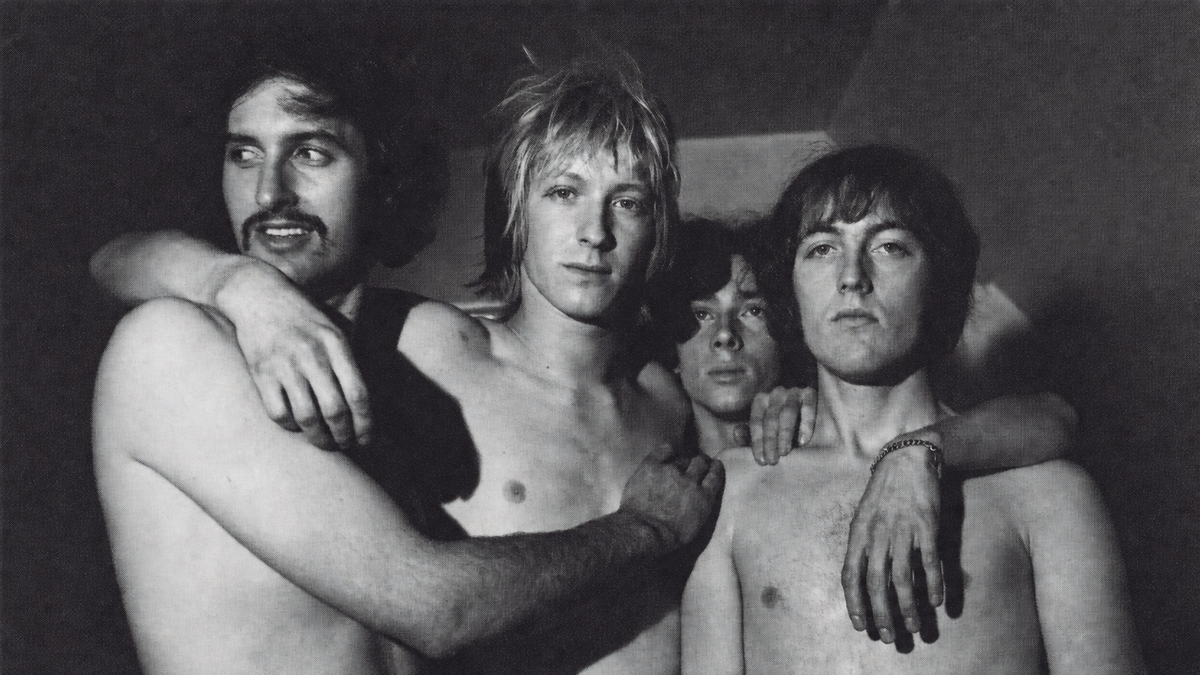
Elmer Gantry’s Velvet Opera called its live show a “musical riot.” In 1968, universities began banning the group’s strobe lights—but beneath the provocation was one of British psychedelia’s most tightly crafted albums.
In June 1968, Disc and Music Echo ran a headline that now reads like the title of a lost exploitation film: “Banned—Elmer Gantry’s audience brainwashing.”
The alarm concerned strobe lights. Colleges including Coventry and Loughborough had forbidden the group from using them after warnings about hypnosis, schizophrenia and other possible effects. Frontman Elmer Gantry—born Dave Terry—told the paper that audiences really did appear transfixed. When the show ended, some were still staring at the stage.
He did not treat that as a marketing opportunity. If the band was succeeding only because it had “brainwashed” the crowd into approval, he said, that would be “a sick scene.”
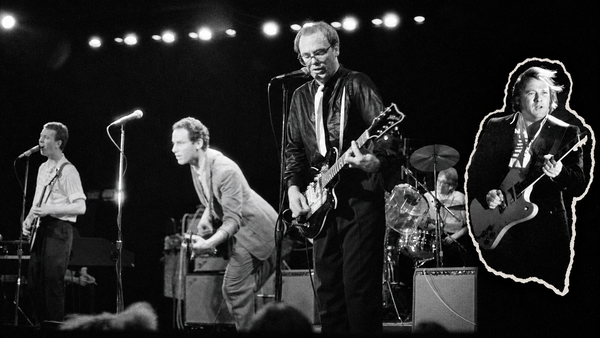
The quote captures the central paradox of Elmer Gantry’s Velvet Opera. Live, the band was confrontational, chaotic and theatrical enough to worry university administrators. On record, it was disciplined: compact songs, vivid arrangements and four musicians squeezing every possible effect from a basement studio and an Ampex four-track.
From R&B professionals to psychedelic outlaws
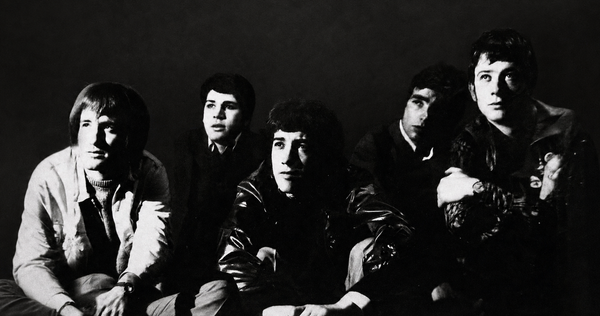
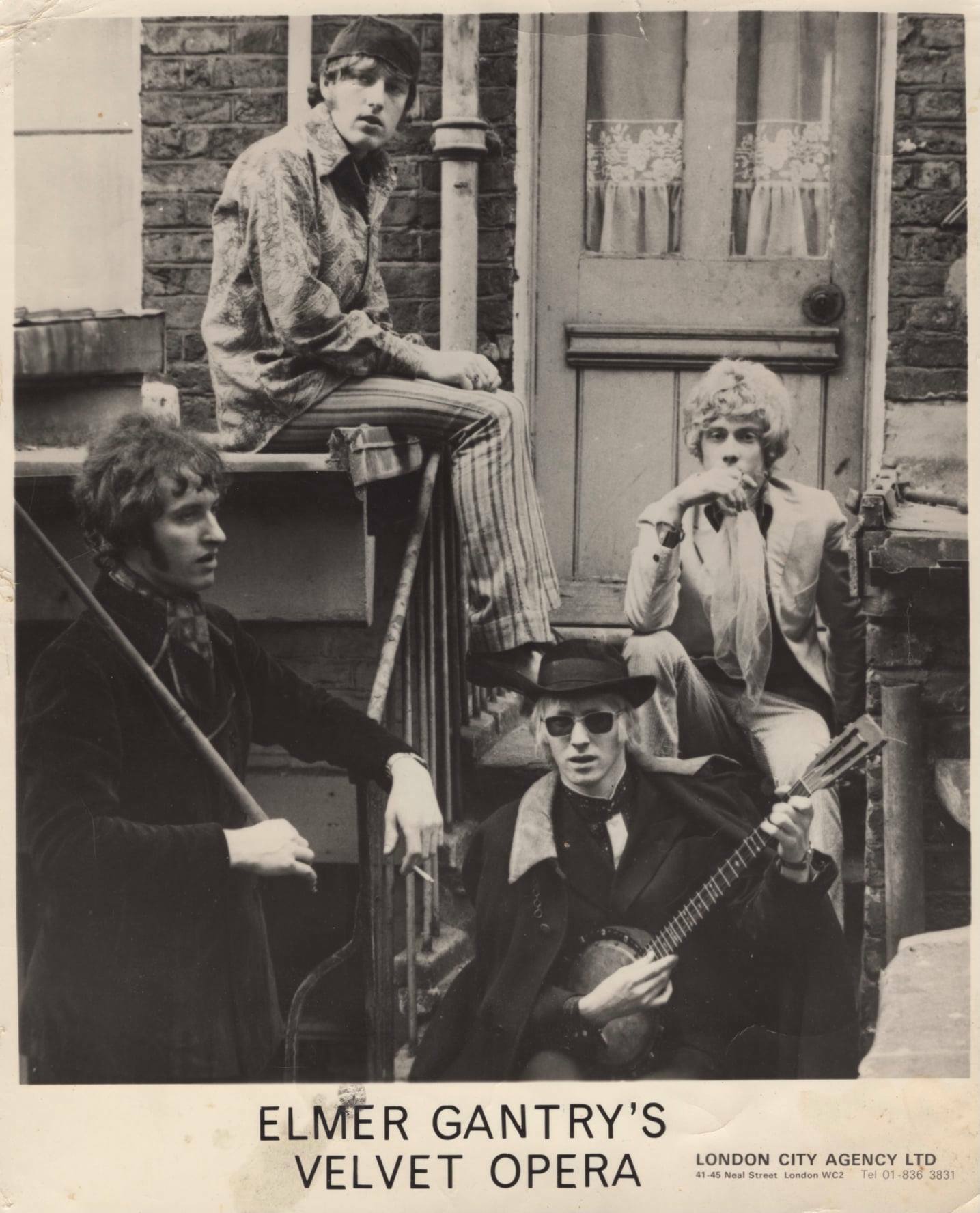
Before the capes, strobes and elaborate name, the musicians had years of work behind them. Terry, guitarist Colin Forster, bassist John Ford and drummer Richard “Hud” Hudson played together in the Five Proud Walkers, a North London R&B and soul group. They worked clubs including the 100 Club, Klook’s Kleek, the Marquee and the Eel Pie Island Hotel, and backed visiting American performers such as Mae Mercer and Champion Jack Dupree.
Then 1967 changed the weather.
“There was a feeling in the air,” Hudson recalled in interviews for Mike Stax’s liner notes. The old formulas had opened up; experimentation was suddenly permitted, even expected. Organist Jimmy Horowitz, a soul purist, departed as the band shed its former identity.
The new name grew from Terry’s appearance. A hat and cape made someone compare him to Burt Lancaster in the film Elmer Gantry. “Velvet” suited the clothes, while “Opera” described the attempt to create theatre rather than stand motionless behind instruments. The group did not set out to rename its singer, but audiences and bandmates began calling Terry “Elmer.” Eventually, the role and the man became difficult to separate.
“Flames” without a chart position
Their transformation caught fire with “Flames.” The song began as a demo at Southern Music’s Denmark Street studio, initially with Horowitz on Hammond organ. When the four-piece returned to it, the arrangement became much more dangerous.
Ford’s Motown-inspired bass line drives the track forward. Hudson’s drums lock beneath it, Forster’s guitar slashes across the rhythm, and Elmer’s soul-trained voice rises as the performance builds toward fuzzed-out collapse. Producer Barry Kingston took it to Derek Everett, who released it on CBS subsidiary Direction in November 1967.
“Flames” never charted, but it became an underground hit through pirate radio, BBC airplay and jukeboxes. Its inclusion on the budget sampler The Rock Machine Turns You On placed the band beside Bob Dylan, the Byrds, Moby Grape, Spirit and the Zombies. The newly formed Led Zeppelin even covered it live.
Tens of thousands of listeners knew the record. The sales chart did not.
Sleeping bags beneath Denmark Street
The self-titled album was recorded in early 1968, mostly at night in Southern Music’s basement. The upstairs offices belonged to a more conventional publishing world; downstairs, the band sometimes stayed for days with sleeping bags, alcohol and cannabis.
The equipment imposed strict limits. On the Ampex four-track, overdubs had to be mixed down carefully, one by one. Instead of treating that as a constraint, the band, Kingston and engineer Paul Holland turned the studio into an instrument. They overdriven compressors and limiters and created phasing by threading tape away from the machine and around a chrome microphone stand.
The available Mellotron was another accident of circumstance. Rented for a Flower Pot Men session, the machine was so large and difficult to move that it remained in the studio. Kingston used it to paint “Long Nights of Summer,” “Dream Starts,” “Reactions of a Young Man” and “Now She’s Gone” with orchestral shadows.
The album moves astonishingly quickly. “Mother Writes” compresses Who-like force into a bass-led burst. “Mary Jane” disguises its cannabis reference as bright pop—so effectively that Ford believed it was simply about a girl. The BBC eventually caught the double meaning and stopped playing the single.
“Air” turns toward raga, with Hudson on sitar. “What’s the Point of Leaving” floats on harmonium and studio swells. “Reactions of a Young Man” packs a kitchen-sink drama about an affair with an older married woman into two and a half minutes. “Now She’s Gone” closes like the final scene of a black-and-white film, Mellotron and piano gathering around the heartbreak.
No two songs quite agree about what the band is. That is the point.
The musical riot breaks apart
By the time the album appeared in July 1968, Forster had left and Paul Brett had joined. The new lineup continued the ferocious shows and recorded the excellent “To Be With You,” but Elmer felt the group’s direction growing folkier and less spontaneous.
Southern Music pressed for a hit with the externally written “Volcano.” The band tried to inject its own wildness, but the January 1969 single confirmed for Elmer that the original vision had slipped away. He left soon afterward, later singing with Stretch and working with the Alan Parsons Project, Jon Lord and Cozy Powell.
Hudson, Ford and Brett carried on as the Velvet Opera and made Ride a Hustler’s Dream—a related band, but a different story. Hudson and Ford would later join the Strawbs and then score hits as Hudson–Ford.
Think Like A Key’s expanded edition returns to the brief period when all four original forces were still in collision. Along with the complete 1968 album, it adds singles, demos, the unreleased “To Be With You” and the sinister “Talk of the Devil,” recorded for a short horror film and originally credited onscreen to the Illusion of Happiness.
The strobe lights made the headlines. The music is why anyone still cares.
Elmer Gantry’s Velvet Opera — Elmer Gantry’s Velvet Opera presents the 1968 album with essential singles, demos and rarities in a Prof. Stoned remaster, with a 16-page booklet featuring Mike Stax’s extensive band history. Explore the release at Think Like A Key Music.