The most connected man in sixties rock that nobody remembers: Shawn Phillips and the sessions that shaped an era
He wrote the riff for Season of the Witch, played sitar for Donovan, visited Abbey Road during Sgt. Pepper’s, and recorded with Traffic. So why doesn’t anyone know his name?

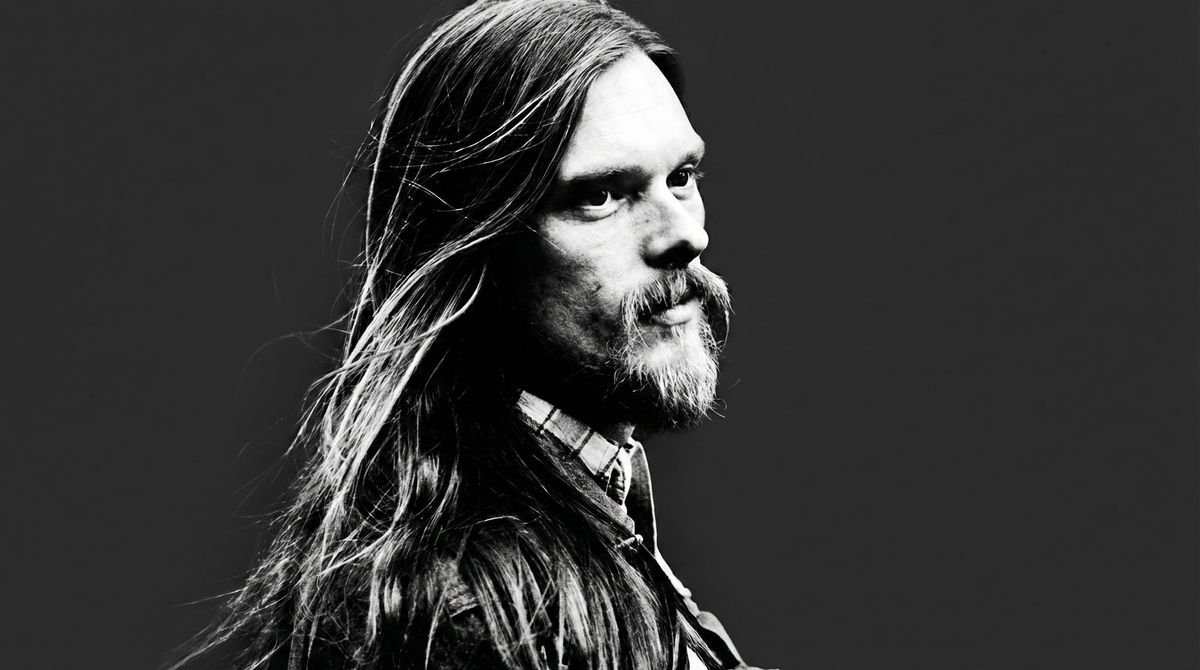
Bill Graham, the man who booked everyone from the Grateful Dead to the Rolling Stones, once called Shawn Phillips “the best kept secret in the music business.” Half a century later, the secret is still being kept.
Phillips wrote the guitar riff for one of the decade’s most covered songs. He played sitar on psychedelic records that defined an era. He was in the room at Abbey Road during the Sgt. Pepper’s sessions. He recorded an album with three-quarters of Traffic. His songs were covered by one of the most inventive bands on the London underground. And yet, ask most rock fans to name him and you’ll get a blank stare. The story of Shawn Phillips is the story of a musician who was everywhere that mattered and somehow ended up nowhere that counted.
The Donovan years
Phillips arrived in London in 1965, a Texan with a classical guitar and a restlessness inherited from his father, the spy novelist James Atlee Phillips, whose career had dragged the family across Mexico, the Canary Islands, France, Switzerland, and half of Africa before Shawn was old enough to vote. London was supposed to be a stopover on the way to India. Instead, it became the place where Phillips walked into the orbit of Donovan, and everything changed.
The collaboration was immediate and deep. Phillips played twelve-string guitar on Fairytale (1965), contributed sitar to Sunshine Superman (1966) and Mellow Yellow (1967), and, most significantly, claims to have written the music for “Season of the Witch,” the brooding, hypnotic track that would go on to be covered by everyone from Julie Driscoll to Hole. Phillips has stated in interviews that he “completely wrote the music” and created the guitar riff that drives the song, with Donovan composing the melody and lyrics over the top. Donovan has acknowledged Phillips’ contribution in subsequent interviews, but the original songwriting credit went to Donovan alone. It remains one of the great uncredited contributions in sixties rock.
Abbey Road, and the edges of history
By early 1967, Phillips was moving in circles that put him at the centre of London’s musical explosion. On February 24 of that year, he and David Crosby visited Abbey Road Studios at Paul McCartney’s invitation during the sessions for “Lovely Rita.” Phillips has spoken about the visit in interviews, recalling McCartney asking them to sing backing vocals. Whether their contributions survived to the final mix is a matter of debate among Beatles historians, but the invitation itself speaks to the regard in which Phillips was held: this was Sgt. Pepper’s, the most scrutinised recording sessions in pop history, and Phillips was welcome in the room.
Stargazer and the London underground
In June 1967, Phillips released “Stargazer” as a single on Parlophone, backed with “Woman Mind.” It was a modest commercial moment, but its influence rippled outward in unexpected ways. Blossom Toes, one of the most adventurous bands on the London psychedelic scene (and a group Phillips had guested with, playing sitar on their 1969 album If Only for a Moment), took to covering both sides of the single in their live sets. Their performances of “Stargazer” from 1969, including a set at the legendary Amougies Festival in Belgium that October, have since surfaced on archive recordings, a testament to how deeply Phillips’ songwriting had embedded itself in the consciousness of the London underground even as his name remained in the margins.
Traffic, and the triple album that wasn’t
In 1970, Phillips recorded what was intended to be the most ambitious project of his career: a triple album of songs, instrumental pieces, and spoken-word poetry, featuring Steve Winwood on keyboards, Jim Capaldi on drums, and Chris Wood on saxophone and flute. Three-quarters of Traffic, in other words, at the peak of their powers, committed to a collaborative vision that could have redefined Phillips’ career.
A&M Records had other ideas. The label edited the project down to a single disc and released it as Contribution, credited to Phillips alone. It remains one of his most acclaimed recordings, but the scope of what was lost, two-thirds of a collaboration with one of Britain’s finest bands, is a reminder of how consistently the industry failed to match Phillips’ ambitions.
The Callender connection
Phillips’ influence extended beyond the sessions and credits that bear his name. Robert Callender, the American raga-rock visionary whose own recordings have been championed by Think Like A Key Music, has spoken about how Phillips played a pivotal role in getting his second album, The Way (First Book of Experiences), a distribution deal.
Sometime in the early 1970s, Callender was meeting with Jerry Love at Polydor about releasing the album. Phillips happened to be around during the meeting and listened alongside, and told Love he should absolutely put the record out. Whether Love needed the push or simply valued Phillips’ ear, the endorsement worked: Callender’s album duly appeared on the Phillips label in Canada, while released on Callender’s own Mitra imprint in July 1972. It’s a small story, but it captures something essential about Phillips’ role in the wider ecosystem of early-seventies music: even when he wasn’t playing on the records, he was shaping which ones got heard.
Still playing, still uncategorisable
Phillips eventually settled in Positano on the Amalfi Coast, writing songs while looking out over the Italian coastline, and built a solo catalogue that now runs to more than twenty-five albums. The music defies easy classification: folk, rock, jazz, progressive, classical, and global traditions bleed into one another across a body of work that rewards patience and resists playlisting. His four-octave vocal range and virtuosic twelve-string guitar playing have earned him a devoted following, even if that following has never translated into mainstream recognition.
He’s still out there, too. Phillips continues to perform live across North America, playing to audiences who’ve followed him for decades and, increasingly, to younger listeners discovering his work through archival releases. Think Like A Key Music’s Live in the Seventies, a three-CD set of previously unreleased concert recordings from 1972 to 1978, and Outrageous, a restored multitrack recording from Austin’s Armadillo World Headquarters in 1976, have brought his live performances back into circulation for a new generation of listeners.
Bill Graham’s secret may never fully get out. But for those who know, Shawn Phillips remains one of the most remarkable musicians of his generation: a man who helped build the sound of the sixties from the inside, and then walked away to build something entirely his own.
A multi-part documentary on Shawn Phillips is currently in production, with a release anticipated in 2026. Stay tuned.